Best Dumbbell Back Workouts for an Airline Pilot: Strong, Pain-Resistant, and Travel-Proof 💪✈️
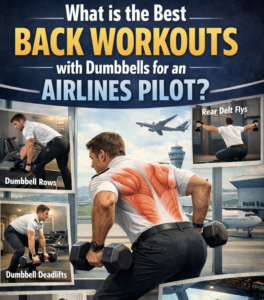
Airline pilots live in a world of long sits, tight hips, forward-rolled shoulders, and irregular schedules. The back takes a quiet beating from cockpit posture, hauling luggage through terminals, and sleeping in unfamiliar beds on layovers. A smart dumbbell back plan does more than build muscle. It builds stamina, posture, and resilience so the body feels steady through duty days and recovers faster between trips.
Dumbbells are the perfect tool for a pilot’s reality. They scale from light “wake the muscles up” sessions to heavy strength work, they fit in small hotel gyms, and they let you train one side at a time to clean up imbalances that show up from carrying a flight bag on the same shoulder. The goal is a back that stays strong from the neck down to the hips, with special attention to the mid-back and lats for posture, plus the rear delts and deep stabilizers for shoulder comfort and control. ✅
For aviation context and industry updates from authoritative sources, these pages keep you connected to the broader airline world: Airline (Wikipedia), IATA Pressroom, FAA Press Releases, EASA Press Releases, ICAO Newsroom, and Uniting Aviation by ICAO. 📰
Back Training Priorities for Pilots
The best back workouts for a pilot focus on three outcomes.
First, posture endurance. The mid-back needs to hold the shoulders “back and down” for long periods without cramping or fatigue. That means rows and rear-delt work, performed with control and clean form.
Second, lat strength. Strong lats help keep the spine supported and make carrying bags and handling overhead bins feel smoother. The lats also act like a stabilizing “seatbelt” around the torso when trained correctly.
Third, low-back and hip stability. The lower back should not do everything. The training should build the glutes, hamstrings, and core support so the lumbar spine stays calm even when the schedule is not. Dumbbell hinges and carries are excellent for this when done with strict technique.
These priorities work together to reduce that familiar feeling of a stiff neck, tight shoulders, and achy low back after long days. 🧠
The Best Dumbbell Back Exercises for Airline Pilots
These movements are “high return” for pilots because they train posture, strength, and stability with minimal equipment.
1) One-Arm Dumbbell Row (bench or suitcase stance)
This is the pilot-friendly staple. It strengthens lats and mid-back, supports shoulder health, and the one-sided nature helps correct imbalances from daily carry patterns. Keep the torso stable, pull the elbow toward the hip, pause briefly at the top, and lower slowly.
2) Chest-Supported Dumbbell Row (incline bench)
When the lower back feels taxed, this row lets the mid-back and lats work hard without excessive spinal loading. It is ideal after long sits or during heavy flying weeks. Pull with the back, not the biceps, and keep the neck neutral.
3) Dumbbell Romanian Deadlift
This hinge builds the posterior chain, including hamstrings, glutes, and the “support system” around the spine. It also teaches better hip mechanics so the low back stops overworking. Move with a proud chest, soft knees, hips back, and a long spine.
4) Dumbbell Pullover (on bench or floor)
This movement trains lats and ribcage mechanics, and it can open up the upper back and shoulders when performed with control. It is not a max-out lift. It is a controlled, steady rep builder that pairs beautifully with rows.
5) Rear Delt Dumbbell Fly (supported when possible)
Rear delts are the anti-slouch muscle group. They help keep shoulders from rolling forward and support better scapular control. Light to moderate loads, slower reps, and strict form win here.
6) Dumbbell Shrug with a Pause
Shrugs get a bad reputation when they are rushed and turned into a neck grind. For pilots, controlled shrugs with a pause can build upper trap strength that supports posture and neck stability. Lift up, pause, then lower slowly without rolling the shoulders.
7) Farmer Carry or Suitcase Carry
Carries are functional gold for pilots. They train grip, core stability, and postural strength in a way that directly matches real life. Farmer carries use two dumbbells. Suitcase carries use one dumbbell and challenge anti-lean strength, which is excellent for spine resilience.
Two Pilot-Proof Dumbbell Back Workouts
These workouts fit hotel gyms, small spaces, and busy duty days. They emphasize control, posture, and consistency. The best frequency is 2–3 sessions per week, rotating between these two sessions. 🔁
Workout A: Posture and Lat Strength
Start with 3–5 minutes of easy movement, then a quick warm-up set of the first two exercises with lighter weight to groove the pattern.
One-Arm Dumbbell Row: 4 sets of 8–12 reps per side
Use a full stretch at the bottom, a strong pull to the hip, and a short pause at the top.
Chest-Supported Dumbbell Row: 3 sets of 10–12 reps
Keep the chest glued to the bench, and move the dumbbells in a smooth arc.
Dumbbell Pullover: 3 sets of 10–12 reps
Slow lowering, steady breathing, and a controlled return.
Rear Delt Fly: 3 sets of 12–15 reps
Choose a weight that forces strict form, no swinging.
Farmer Carry: 4 rounds of 30–45 seconds
Walk tall, ribs down, shoulders calm, and move with purpose.
This session builds that “upright strength” that makes long sitting feel less draining and makes the shoulders sit where they belong. ✅
Workout B: Posterior Chain and Spine Support
Warm up with hip hinges using very light dumbbells and a few slow bodyweight hinges to prepare the hamstrings and glutes.
Dumbbell Romanian Deadlift: 4 sets of 8–10 reps
Move slowly, feel hamstrings load, and stop before form breaks.
Suitcase Row (one-arm row without a bench, hinged stance): 3 sets of 10–12 reps per side
This version adds core stability. Keep the torso from rotating.
Dumbbell Shrug with Pause: 3 sets of 10–12 reps
Pause at the top for one second, then lower under control.
Rear Delt Fly or Reverse Fly (supported if possible): 3 sets of 12–15 reps
Stay strict and feel the back of the shoulders working.
Suitcase Carry: 3 rounds of 30–45 seconds per side
Walk tall without leaning. This trains the torso to resist the side-bending that can accumulate from daily carry habits.
This session makes the back feel “supported from below,” which is the secret to keeping the low back calmer during long duty stretches. 🧳
Pilot-Smart Technique Rules That Keep the Back Happy
Rows stay clean when the ribs stay down and the neck stays neutral. A pilot’s neck already gets enough strain from posture and head position, so training should avoid craning forward. A steady gaze a few feet ahead on the floor usually keeps alignment solid.
Hinges stay safe when the hips move and the spine stays long. The dumbbell Romanian deadlift should feel like hamstrings and glutes doing work, not the lower back. If the lower back burns first, the range of motion is too deep or the torso position is drifting.
Carries stay effective when the torso stays stacked. Think tall posture, quiet shoulders, and controlled steps. These are not speed drills. They are posture drills under load. 🧱
Conclusion
The best back workouts with dumbbells for an airline pilot build strength that travels well, supports posture for long sits, and protects the body from the repetitive stress of flying life. Rows build the mid-back and lats for posture and carrying strength. Romanian deadlifts and carries build the posterior chain and spine support that keeps the lower back from feeling overworked. Rear delts and controlled shrugs reinforce shoulder alignment so the upper body feels stable and comfortable across duty days.
Consistency wins in aviation schedules. Two well-designed dumbbell back sessions each week, performed with clean form and steady progression, create a stronger back that holds up in the cockpit, in the terminal, and in everyday life. 💪✈️